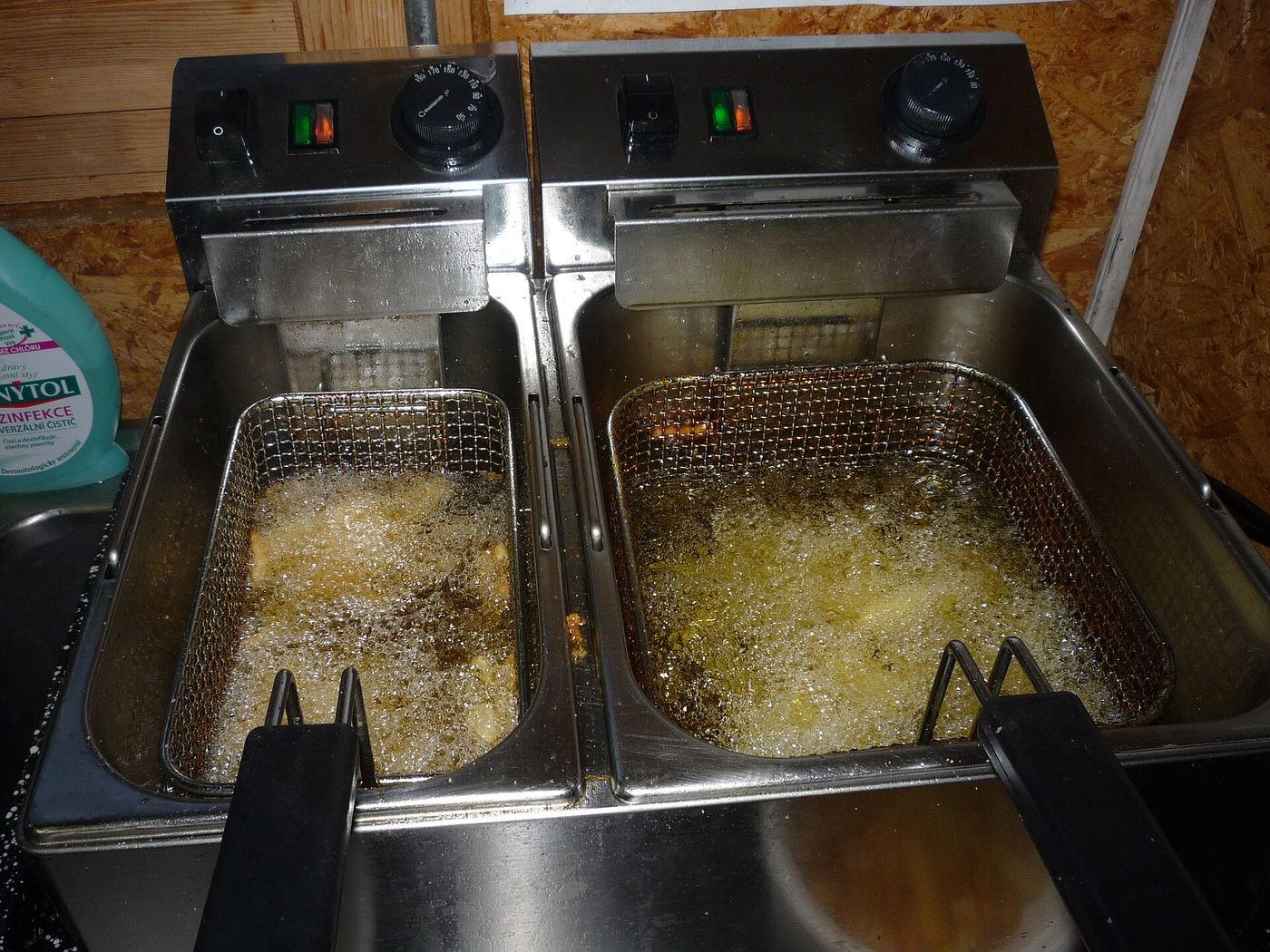
Photo: Pohled 111, CC BY-SA 4.0, via source.

Facts checked 2026-11-15.
Pizzerias, diners, pubs and fish shops in New York run fryers hard, and the fryer is the appliance that reaches furthest into the rest of the kitchen. It affects the hood, the suppression system and how oil is handled at close. Use New York Commercial Kitchen Connect to send a request to equipment companies near you.
1. Tank size, fuel and BTU
A fryer is sized by pounds of oil. Pitco's gas economy line runs from 35 to 90 pounds, at 70,000 to 150,000 BTU per hour. Vulcan lists a 70-pound gas floor fryer with a stainless tank, 150,000 BTU per hour and a five-year tank warranty. Dean's GF14 holds 40 pounds at 100,000 BTU per hour and takes natural gas or LP.
Makers of commercial fryers include Vulcan, Dean and Pitco.
ENERGY STAR sorts fryers by pot width: a standard vat has a pot of 12 inches to under 18, and a large vat has 18 to 24. Plan for how oil gets filtered, because a fryer with a built-in filter and one served by a separate unit are used in different ways at closing time.
2. What New York checks
Outside New York City, restaurants answer to Subpart 14-1 of the State Sanitary Code. Section 14-1.91 wants equipment made of nontoxic, durable, nonabsorbent material with no painted food-contact surfaces, and section 14-1.95 lets existing equipment stay if it is in good repair and sanitary. Suffolk County's plan review guide asks for commercial-grade equipment, NSF approved or equivalent, with grease-producing equipment under a hood with grease filters. NSF/ANSI 4 names fat and oil fryers and filters. Gas units are tested to ANSI Z83.11 / CGA 1.8.
A fryer in New York City falls under the city codes and NYC Health, so those owners should check the city's pages first.
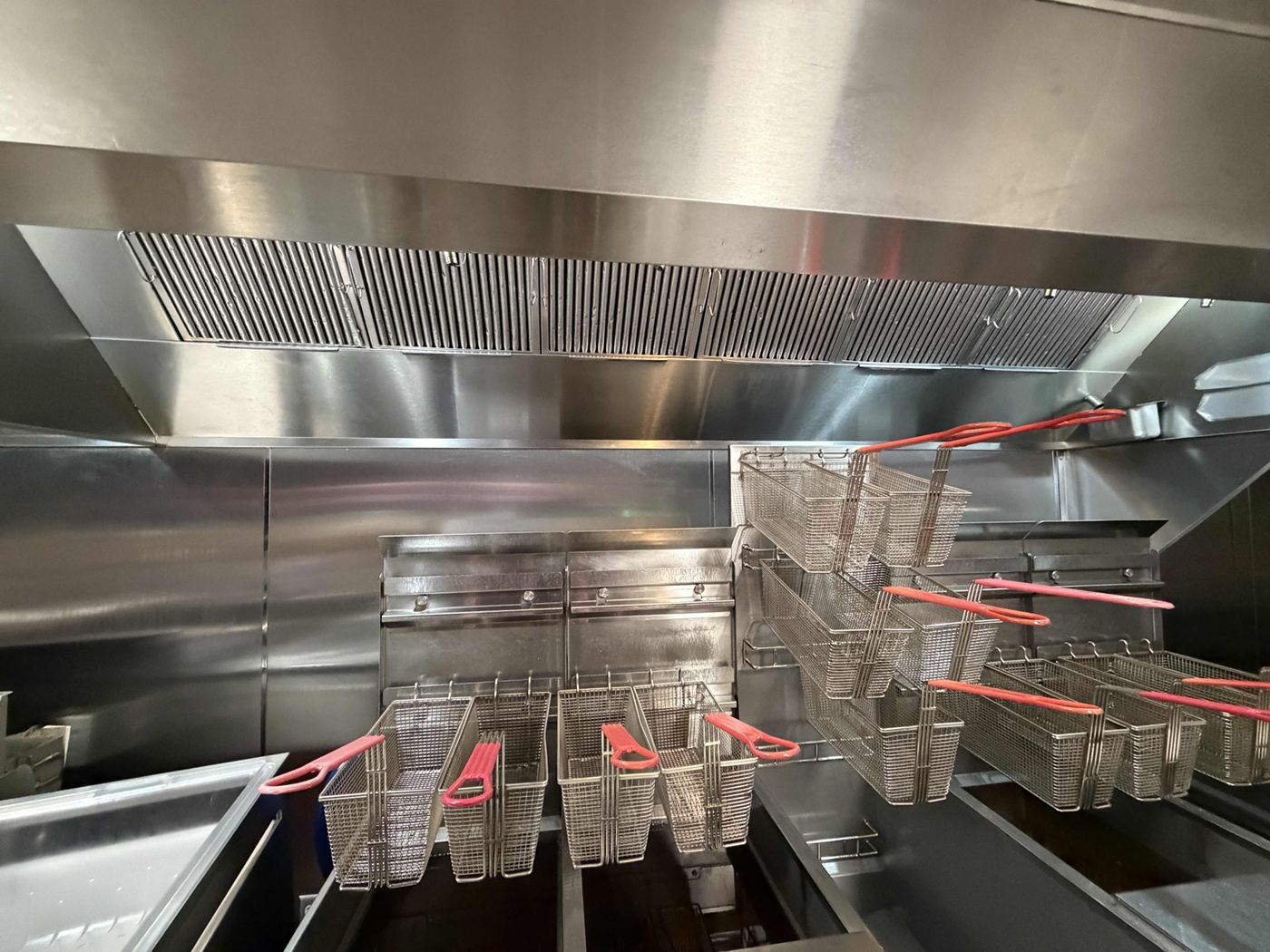
The 2025 Fire Code of New York State, section 606.2, calls for a Type I hood over appliances that make grease vapor. Section 904.14 sets the extinguishing system, and section 904.14.5.1 says that when cooking media, equipment position or the equipment itself changes, the system has to be brought up to the code again. A bigger fryer or one moved a few feet can fall under that line. Check the hoods and exhaust page and ask your fire suppression company to look before delivery.
Get prices for this item. One request, and you pick how many sellers quote it.
Get quotes3. Energy use and rebates
ENERGY STAR needs 50 percent cooking efficiency from gas fryers and 80 percent from electric ones, with an idle energy limit, and it leaves out closed vat fryers. For rebates, look up your ZIP code in the ENERGY STAR Rebate Finder and ask your utility's business desk.
4. What to ask a seller
- How many pounds of oil, and how many BTU per hour?
- Natural gas or propane?
- Is filtering built in or separate?
- Does the exact model carry an NSF mark and an ENERGY STAR label?
- Which suppression system covers the hood, and does it include this fryer?
- What are the cabinet width and depth, and what does the tank warranty say?
A fryer request is sent to the local equipment companies you choose, one to five of them.
Other kitchen equipment
Questions
Does a commercial fryer need a hood in New York?
A commercial fryer needs a Type I hood because it makes grease vapor. The Fire Code of New York State, section 606.2, requires one over such appliances, with listed exceptions.
What happens to my suppression system if I change fryers?
Section 904.14.5.1 says a change in cooking equipment or its position means the extinguishing system must meet the code again. Ask the servicing company before you install.
How big a fryer does a restaurant need?
A restaurant fryer is chosen by pounds of oil and the BTU rating. The makers listed here run from 35 to 90 pounds on gas floor models.